Free shipping onorders over €30 with Relais Colis and€100 with UPS – ONLY VALID ON THE WEBSITE. ONLY IN MAINLAND FRANCE.

PLA Material Guide

Black PLA - Francofil

PLA is the most commonly used 3D filament in 3D printing. Rigid and non-flexible, it offers high printing precision. Bio-sourced and derived from corn starch, PLA is appreciated for its ease of use, fine details, variety of colors, absence of toxic emissions, and biodegradability under suitable conditions. 

Why PLA?

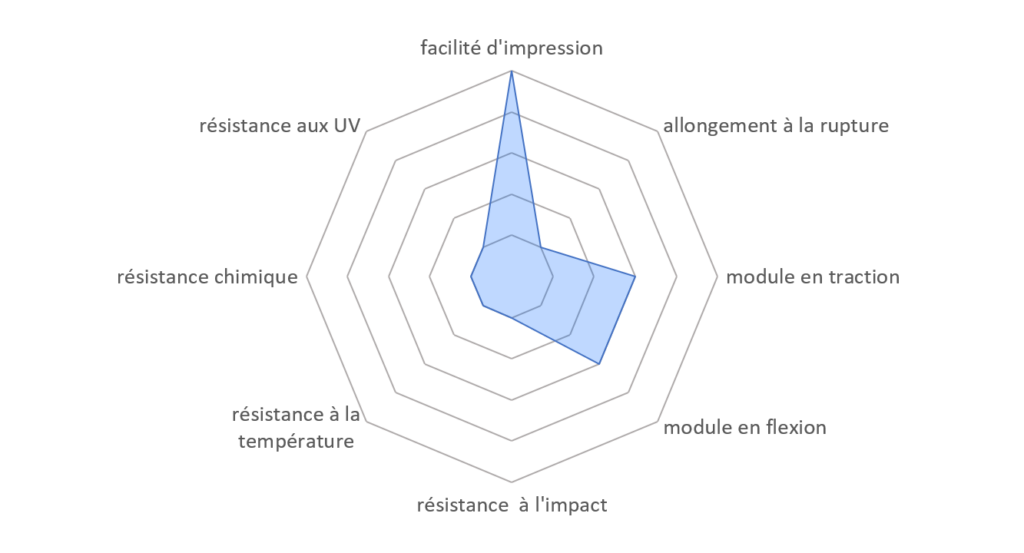
PLA is one of the easiest 3D printing materials to print, with reliable adhesion between layers, ensuring consistent manufacturing quality. Thanks to its rigidity, PLA is used for prototypes with low mechanical and thermal stress, decorative objects, and parts requiring a solid structure. Its bio-sourced origin and biodegradability in industrial composting contribute to the CSR (Corporate Social Responsibility) policy. It is also the material that offers the most choices in terms of colors and effects.

Advantages

  • Low price
  • Easy to print
  • Very good level of detail
  • Low shrinkage
  • Suitable for large models
  • Wider selection of colors and aesthetic effects

Disadvantages

  • Brittle and inflexible
  • Low UV resistance
  • Low temperature resistance
  • Difficult post-processing

How to print PLA?

To assist you in choosing your PLA printing parameters, we offer a guide to standard values suitable for this material.
The parameters should be adjusted according to your 3D printer

Extrusion temperature

190°C to 220°C

Bed temperature icon

Bed temperature

Not required

Icon for printing speed

Printing speed

30 - 100 mm/s

Adhesion

Glass surface Glue stick Hair spray

Cooling

100%

Questions / Answers

A heated bed is not essential for printing PLA because it has a low shrinkage rate. However, if the part is massive, or if you encounter warping or detachment of the part with your PLA, using a heated bed can help solve this problem. The bed should be set to a maximum temperature of 55°C; above this, the PLA may deform.

Make sure the printing bed is level and clean. Using an adhesion surface such as blue tape, glue stick, or adhesive sprays can also help. Maintaining a draft-free environment is beneficial.

PLA should be stored in a cool, dry place, preferably in a bag with a desiccant to prevent moisture absorption, which can cause problems during printing.

No, PLA has low heat resistance and can begin to soften from 50°C. For high-temperature applications, materials such as ABS or PETG are recommended.

Free Delivery

Free delivery on orders over €30 with Relais Colis and €100 with UPS - ONLY IN METROPOLITAN FRANCE

Satisfaction Guaranteed or Your Money Back

Returns within 14 days

100% secure payment

PayPal / MasterCard / Visa / Apple Pay / Administrative Mandate